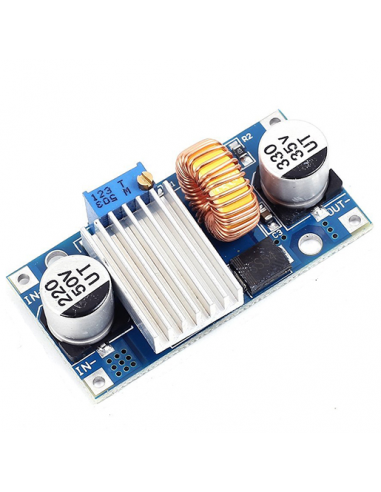
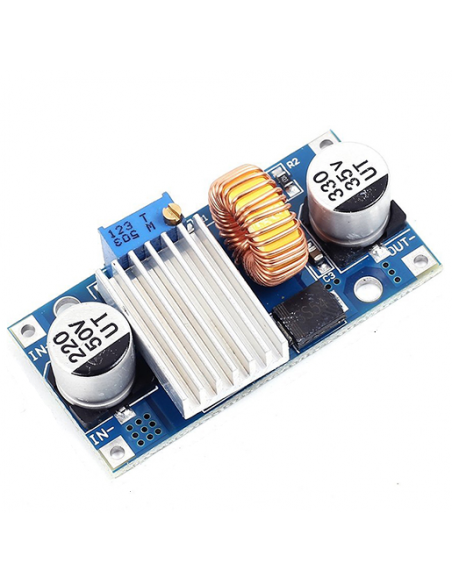
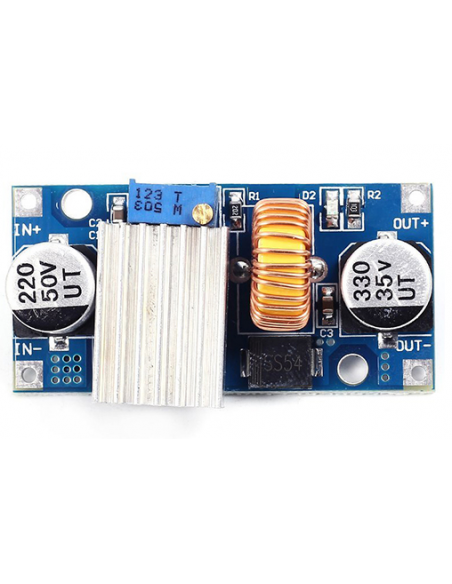
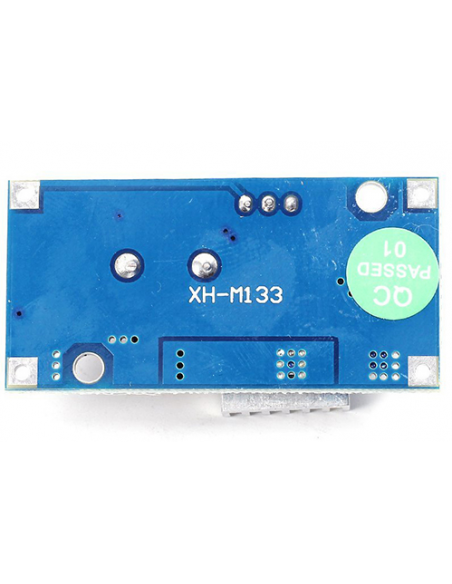
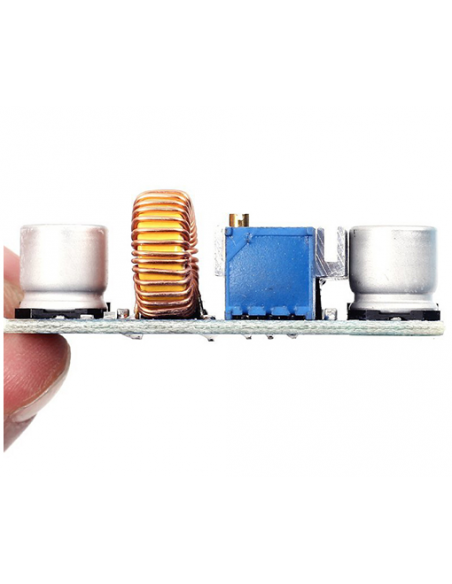
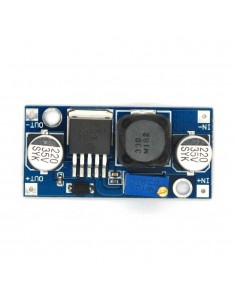
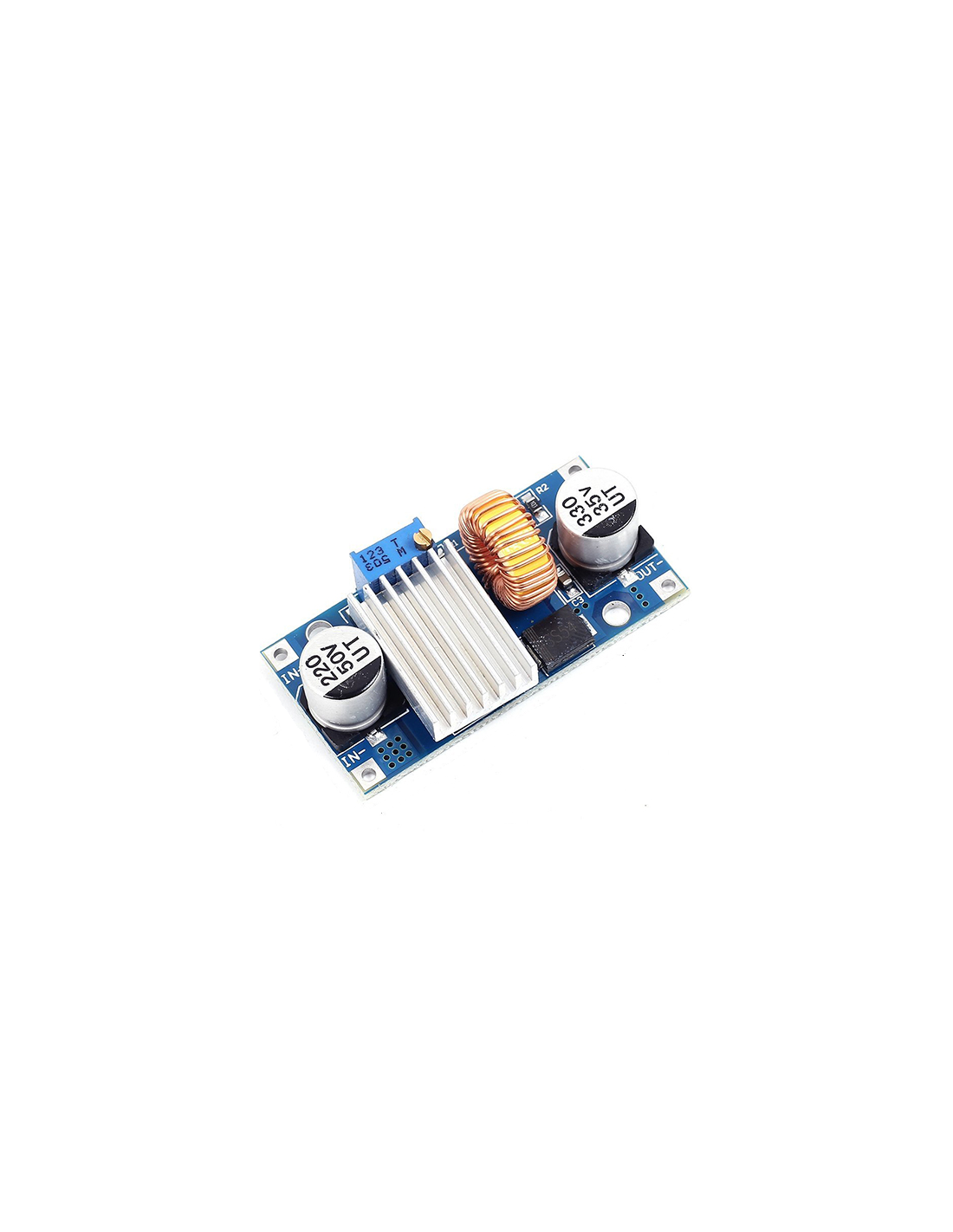
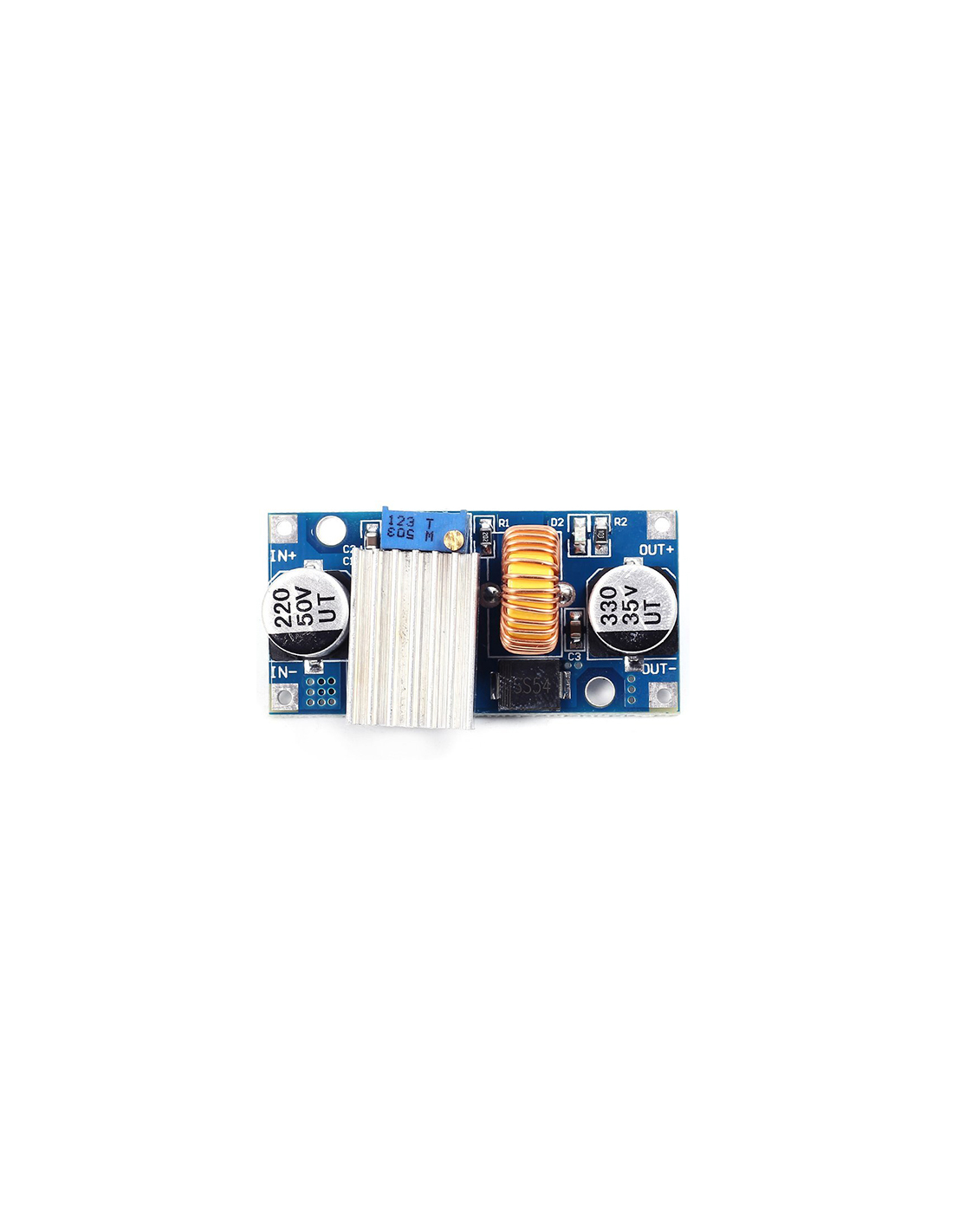
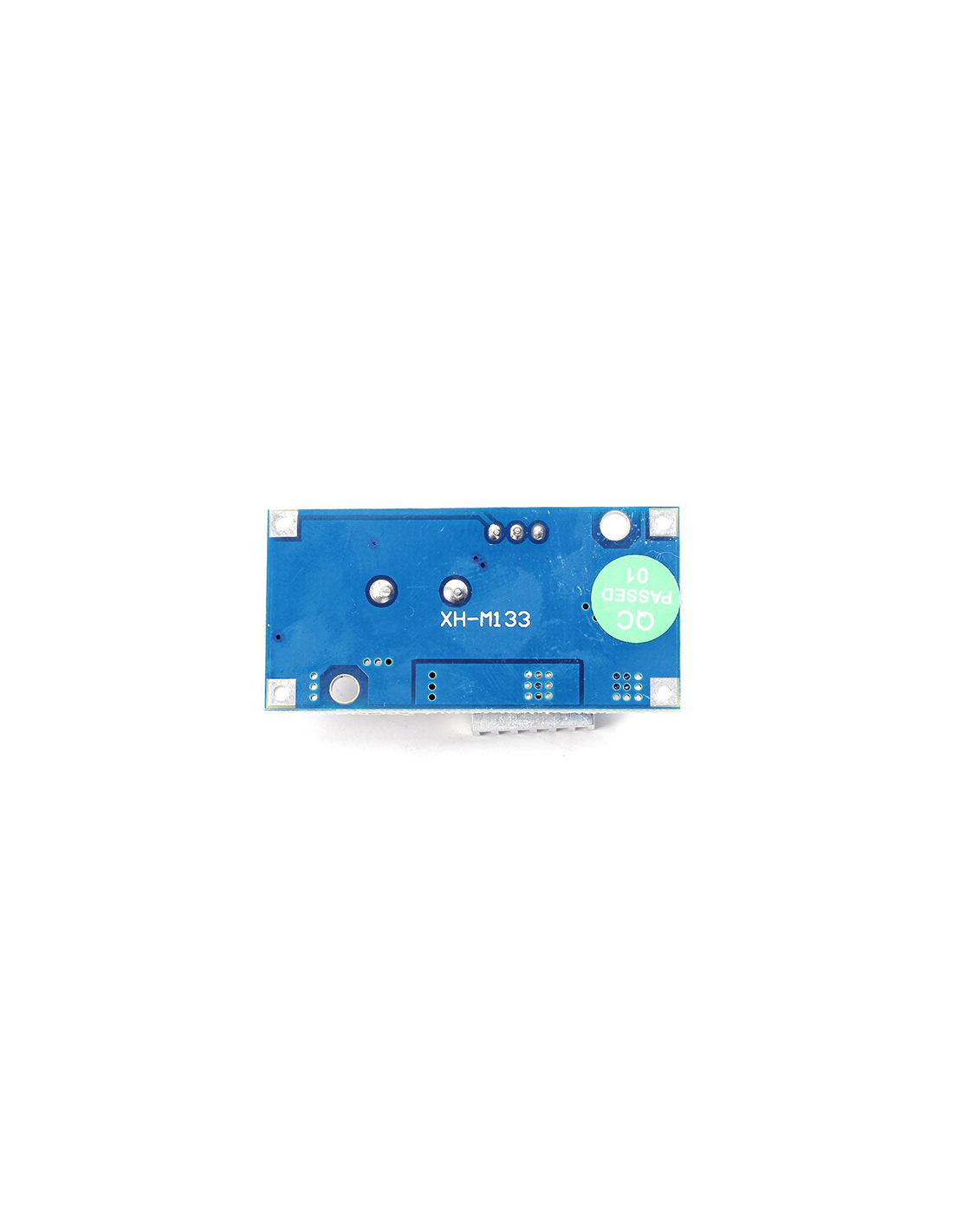
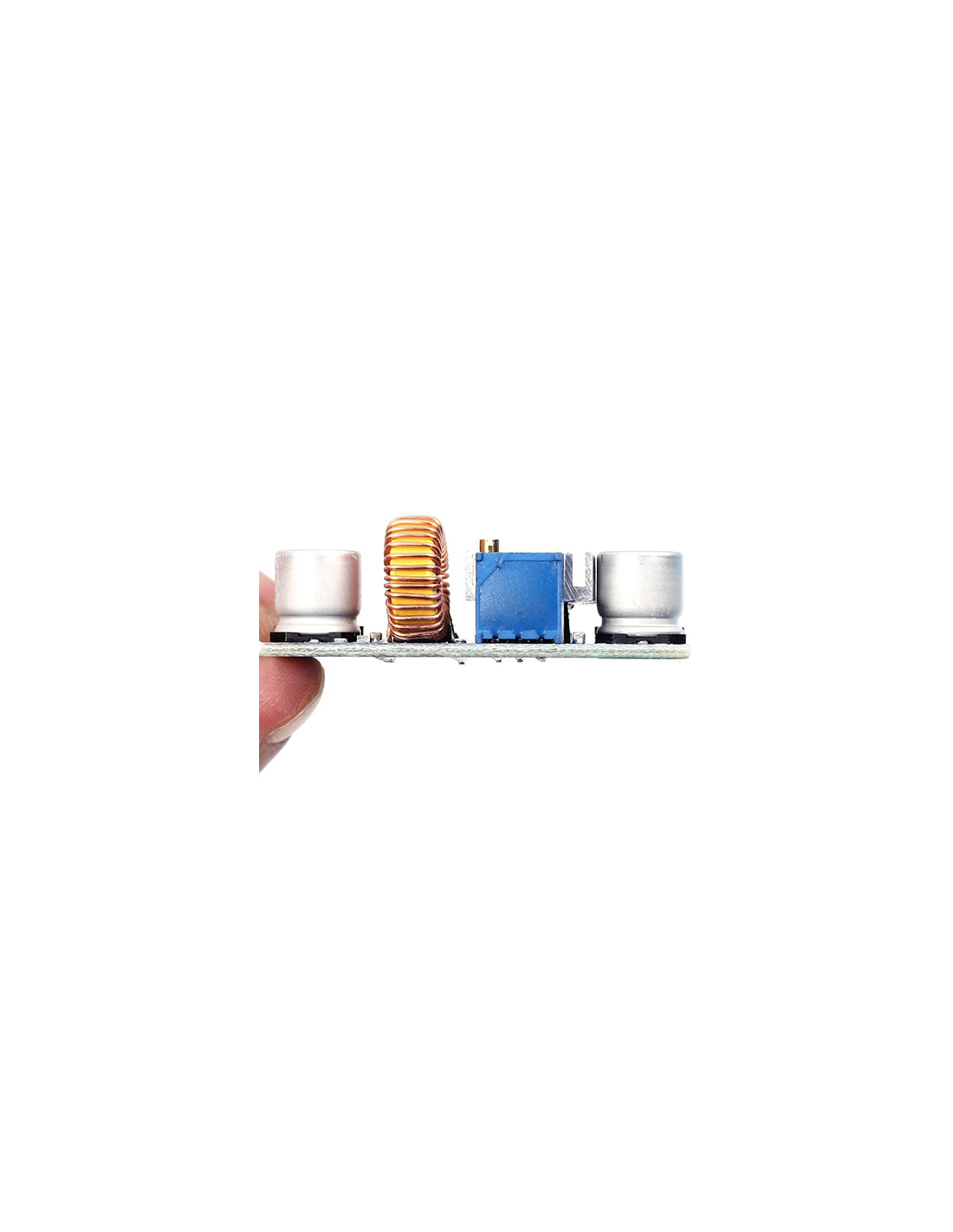
The XL4015 DC-DC 5A Adjustable Buck Converter Module is a compact and efficient step-down voltage regulator designed to convert a higher DC input voltage to a lower, adjustable DC output voltage.
Based on the XL4015 buck converter IC, this module supports an input voltage range of 4V to 38V DC and provides an adjustable output voltage from 1.25V to 36V DC. With a maximum rated output current of up to 5A and conversion efficiency of up to 96%, it is ideal for electronics projects, DIY power supplies, battery-powered applications, LED projects and voltage regulation.
The onboard adjustment potentiometer makes it easy to set the required output voltage, while the integrated LED power indicator provides a quick visual indication that the module is powered.
Key Features
- XL4015 DC-DC step-down (buck) converter
- Converts a higher DC voltage to a lower adjustable DC voltage
- Wide 4V–38V DC input voltage range
- Adjustable 1.25V–36V DC output
- Maximum rated output current of up to 5A
- High conversion efficiency of up to 96%
- Onboard potentiometer for output voltage adjustment
- LED power/status indicator
- Short-circuit protection
- Compact PCB design
- Suitable for DIY electronics and power supply applications
Specifications
Converter Type: DC-DC Step-Down / Buck Converter
Controller: XL4015
Input Voltage: 4V–38V DC
Output Voltage: 1.25V–36V DC adjustable
Maximum Output Current: Up to 5A
Conversion Efficiency: Up to 96%
Voltage Adjustment: Onboard potentiometer
Indicator: LED power indicator
Board Dimensions: 49 × 26 × 19 mm
Typical Applications
The XL4015 buck converter can be used for adjustable DC power supplies, Arduino and microcontroller projects, robotics, LED power supplies, battery-powered projects, automotive electronics, DIY electronics and general voltage regulation.
Important Note
This is a step-down converter, meaning the output voltage must be set lower than the input voltage. Actual continuous output current and efficiency depend on the input/output voltage difference, load and cooling conditions. For higher-current applications, adequate ventilation or additional cooling may be required.